UX & UI Designer
Hello,
I design digital products for web and mobile — and the part I care about most happens before anything gets drawn. Who is on the other side of this screen? How often do they come back? What do they already know, and what are we making them learn for no good reason?
That means the work usually starts in FigJam rather than Figma: auditing what exists, mapping journeys and flows, writing the interface copy, and arguing about which steps have actually earned their place. Then I design the interface, take it through iterations with stakeholders and engineers, and leave behind a documented system so it stays consistent after I have moved on.
I have worked across sensors and hardware, retail and loyalty, fintech, enterprise SAP tooling and health — plus presales and client-facing work, which is really just the same skill pointed at a room full of opinions.
Outside of it all I like new places, unfamiliar food, and noticing how badly signage is designed in airports.
The work, stage by stage
Not just the pretty end
Understand
Auditing what already exists, reading whatever research is on the shelf, and talking to the people who answer support tickets. Most of the real problems are already known by someone — they have just never been written down in one place.
- AuditsStakeholder interviewsCompetitive review
Map
Personas that describe behaviour rather than demographics, journey maps that admit where someone gets frustrated, and flows covering the empty, error and success states before the happy path gets designed twice.
- Journey mapsUser flowsInformation architecture
Design
Wireframes into responsive interface design across desktop, tablet and mobile — including the interface copy, because a heading that has to be rewritten later usually means the layout was wrong.
- WireframesResponsive UIUX writingPrototypes
Systemise
Foundations, component libraries, variants, tokens and developer-facing annotations. The unglamorous work that makes the next six months faster for everyone who touches the product.
- Design systemsComponent librariesHandoff
how the work actually goes —
Four things I keep coming back to
Ask the boring questions
How often does this person sign in? What do they already know? The most interesting design decisions come out of the least interesting answers.
Clarity first
Hierarchy before decoration. If someone has to hunt for the one thing that matters, the layout has not earned its keep yet.
Systems, not screens
Components, variants and tokens, documented with their states. The difference between a redesign that lasts and one that drifts by spring.
Warmth counts
Even enterprise software is used by someone having a day. A little softness in the colour, the copy and the spacing goes a long way.
the fine print —
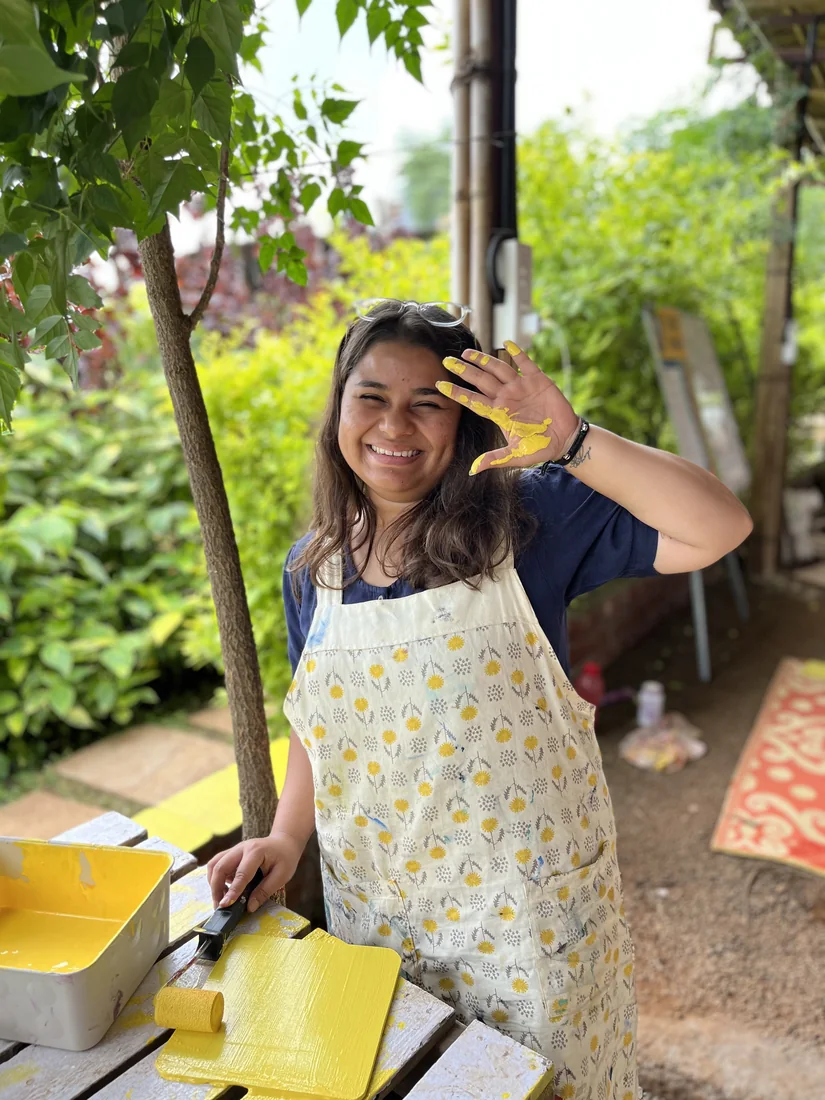
I am, admittedly,
a bit of a klutz.
I have knocked a full coffee onto a printed moodboard the morning of a review. I have tripped over the one cable in an otherwise empty room. I once sent a file named final-FINAL-v3-actually.fig and meant it sincerely.
None of that ever made it into the work — if anything it is why I am so stubborn about the systems. When you know you will drop something eventually, you build the kind of structure that survives being dropped.
-
Right now
UX & UI Designer
End-to-end product design across web and mobile — sensors, retail, fintech and health — plus the design systems that keep them consistent.
-
Along the way
Presales & client-facing
Pitching concepts, walking stakeholders through rationale, and translating a room full of opinions into one direction everyone can build against.
-
Always
Building the vocabulary
Components, variants, tokens, annotations. The unglamorous work that makes the next six months faster for everyone.
-
Off the clock
New places, new food
Most of what ends up in my work started as something I noticed on a walk, in a menu, or on a wall somewhere.
what's on the desk —
The toolkit
Design
Figma daily, FigJam for everything before it, Photoshop, Adobe XD, and a growing pile of AI tools that are useful about half the time.
Craft
Responsive UI for web and mobile, SAP design standards, bento layouts, dense data tables, and illustration when a screen needs a voice.
Systems
Foundations, component libraries, variants, tokens and dev-facing annotations — built to be handed over, not just admired.